
isingle-cultivar tencha · 30g tin
the okumidori reserve.
a rare okumidori, shade-grown in uji and stone-milled cool. sealed in a hand-finished tin of thirty grams — the first pour of a very small harvest.
$210
the collection, in full
a rare okumidori, shade-grown in uji and stone-milled cool. sealed in a hand-finished tin of thirty grams — the first pour of a very small harvest.
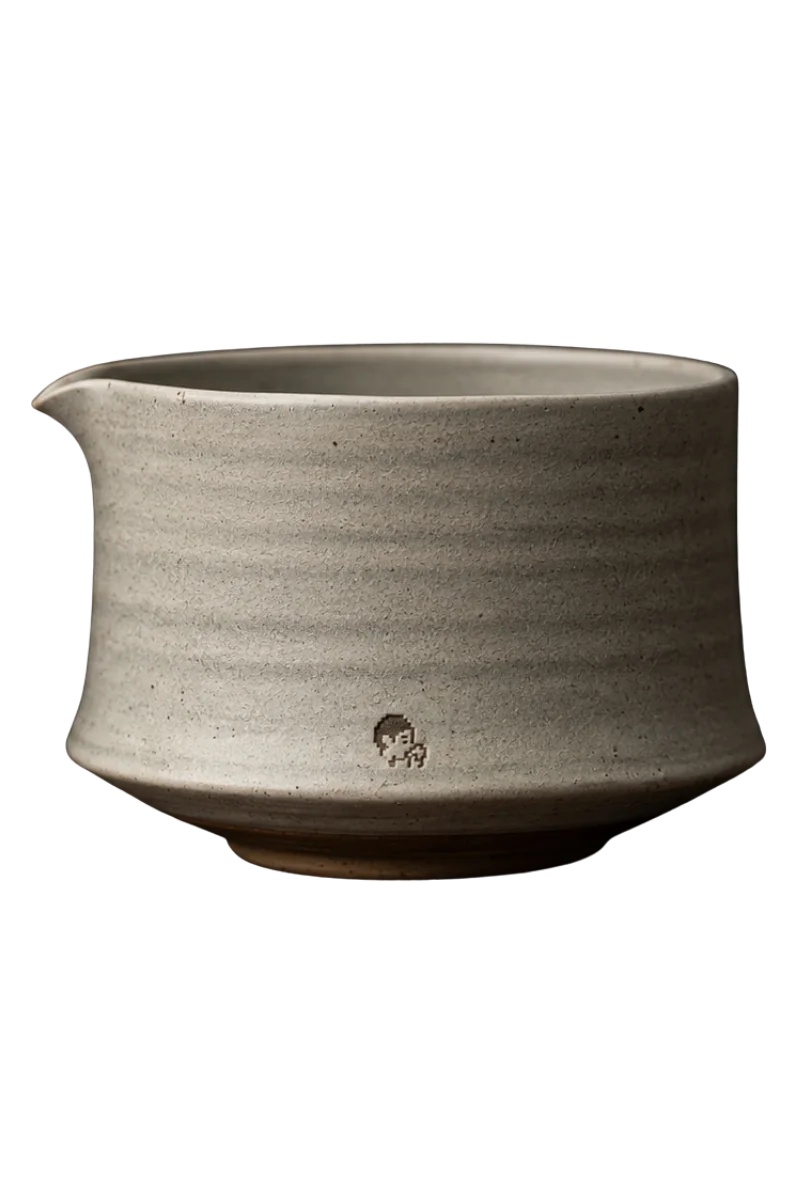
a chawan with a broad, open well — raised to hold the heat and give the whisk room to breathe. the vessel every bowl begins in.
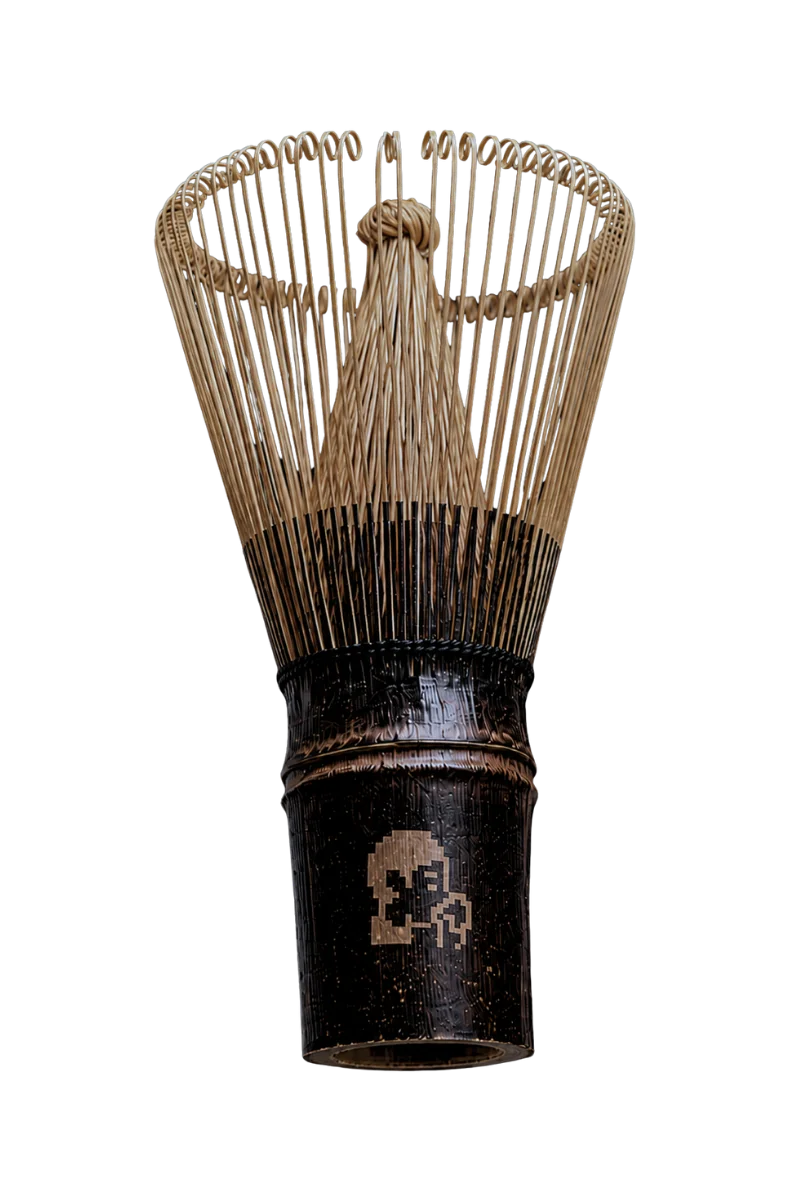
one length of aged bamboo, split by hand into eighty fine tines. the tool that turns powder and water into something whole.

a chashaku cut from a single stem to carry one measure. the smallest tool in the ritual, and the most personal.

a hōjicha roasted slow and drawn deep to amber. fifty grams, numbered by hand and made in a single seasonal run.
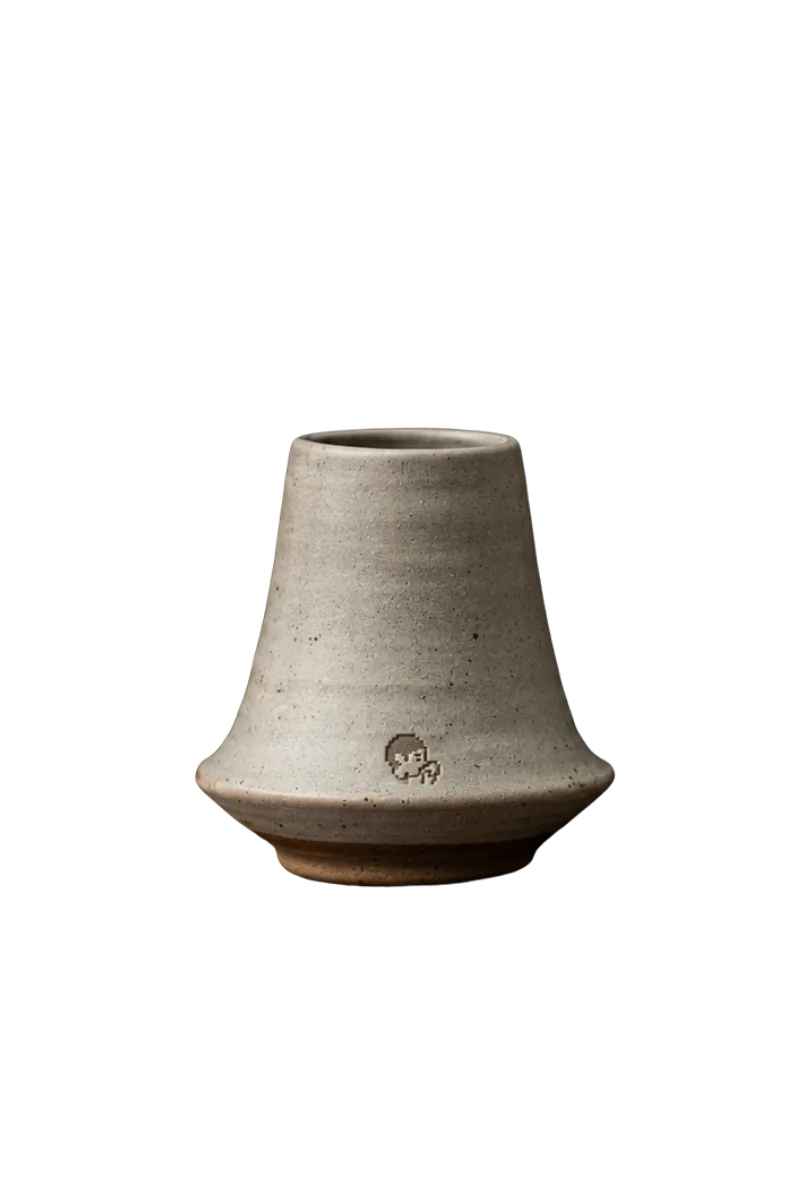
a quiet ceramic perch that lets the takayama chasen dry as it should — tines splayed, curl kept, ready for the next bowl.
the ritual of care
ceremonial tools are made to be used, and to last. cared for simply and well, a bowl, a whisk, and a scoop outlive the seasons. a short study in tending each one.
hand-thrown stoneware
the vessel everything happens in.
the bowl is porous stoneware. good care keeps it unscented and sound, so nothing stands between the leaf and the bowl — the foundation of proper matcha bowl care.
the care
rinse with warm water only. detergent soaks into the clay and later returns to the tea; the bowl never needs it.
wipe the inside with a soft cloth and let it air-dry fully before it is stored, so no moisture sits in the foot.
avoid sudden temperature change — never pour boiling water into a cold bowl, which can craze or crack the glaze.
a word from the studio
warm the bowl with hot water before whisking. it holds preparation temperature, and over years seasons the glaze evenly.
the bowl is porous stoneware. good care keeps it unscented and sound, so nothing stands between the leaf and the bowl — the foundation of proper matcha bowl care.
studio note: warm the bowl with hot water before whisking. it holds preparation temperature, and over years seasons the glaze evenly.
the whisk is split bamboo — the most delicate object in the set, and the one that most rewards correct handling. nearly all bamboo whisk maintenance comes down to how it is wetted and how it is dried.
studio note: let it dry completely between uses on its stand. a whisk left damp or lying flat loses its curl — and its tines — within weeks.
the stand holds the whisk in its shaped curve as it dries, preserving the tine geometry and letting air reach every surface. it is quiet, and it does more for a whisk's life than anything else.
studio note: placement is the whole point — a spot with moving air dries the whisk evenly, while a closed cupboard traps moisture and invites mustiness.
the scoop is unfinished bamboo, and water is its only real enemy. kept dry, it lasts a lifetime and takes on a quiet patina from the hand.
studio note: keep it out of the sink entirely. a single soak raises the grain and can warp the fine tip that meters the powder.
sifting breaks the clumps matcha forms as it rests, so it disperses evenly and whisks without a single lump. the fine mesh wants a light hand.
studio note: sift directly before whisking, not in advance. matcha draws moisture from the air quickly once it leaves the tin.
matcha is alive to light, heat, air, and moisture, and it fades first in aroma, long before colour. to store ceremonial matcha well is to guard those four. roasted tea is more forgiving, but the same enemies dull it.
studio note: buy matcha in the amount you'll finish within a month of opening, and trust your nose: a flattening aroma is the first sign it's time for a fresh tin.